< Back to Khoj International Residency August-September 2026
Map of Departure | Cloud Calligraphy | 1.28 s



Map of Departure
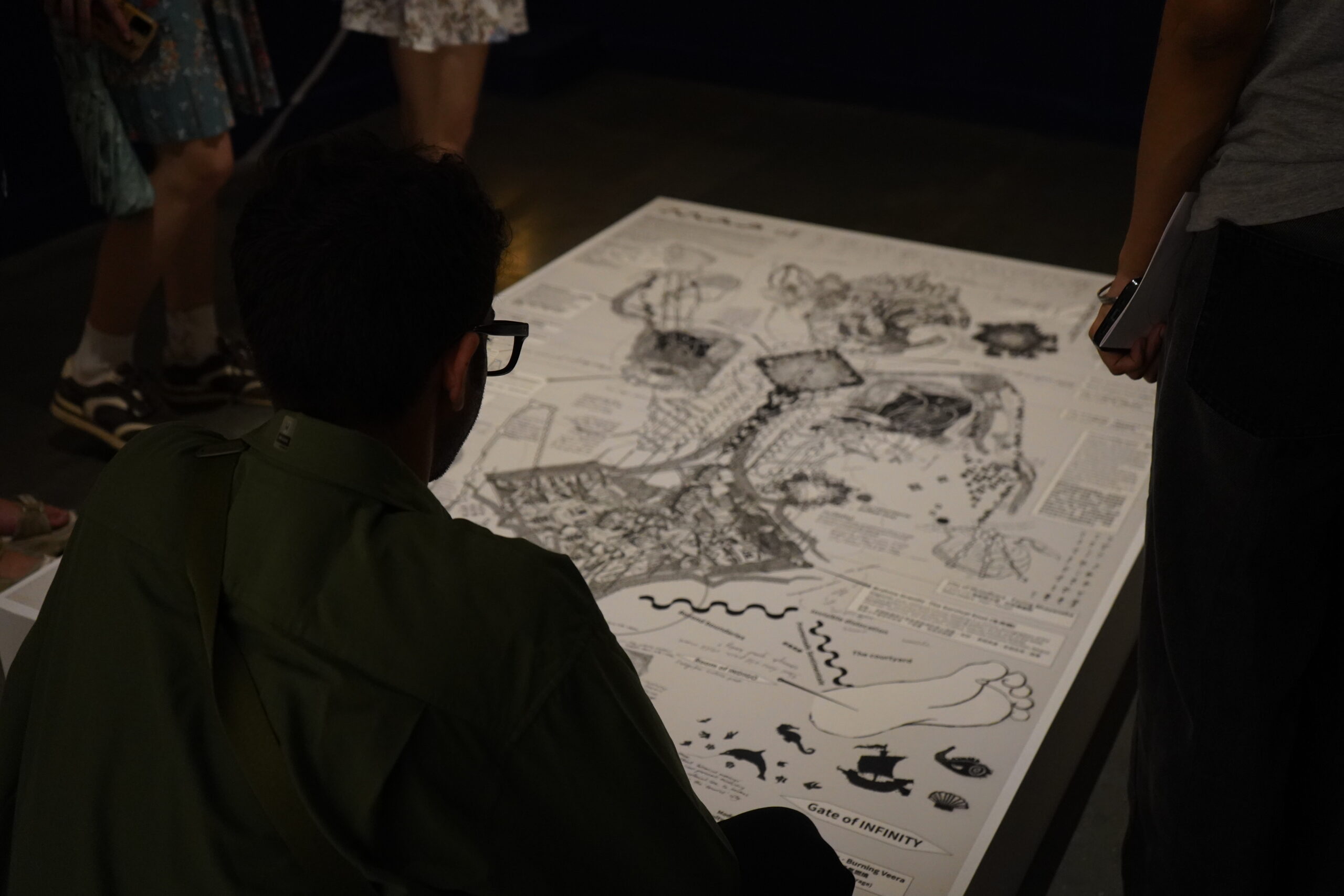
‘Map of Departure’ is a self-portrait body map turned into a speculative somatic infrastructure for healing, drawing on the Taoist Neijing Tu and the Indian Subtle Body (Tantric Anatomy). Rather than defining the body as mere biological tissue, both traditions view the interior self as an alchemical cosmos of energy transformation, where systemic trauma manifests as blockages of Qi/Prana. For bodies navigating shifting geopolitical structures, trauma is rarely a sudden, singular event. It operates as a slow, structural friction – an invisible cloud of micro-violence and emotional estrangement, imprinting directly onto the nervous system. ‘Map of Departure’ makes these unutterable psychological distresses visible. Healing begins when these systemic wounds are acknowledged, processed, and given an inner archive. In this map, the body unfolds as a city: meridians as train lines, acupuncture points as stations, and chakras as cities. Each city carries a feeling; each feeling is a way of moving through. From the Root City, where fear is faced, to the Crown City, where stillness returns, the body is walked as a landscape of departure and return. The nine cities are not destinations. They are passages. Each one offers a different mode of healing. This map is an exit, a way to depart and unfold from our invisible wounds, unresolved trauma, and pain, through dreams, through love, through relief, through the ‘Map of Departure’.
Cloud Calligraphy
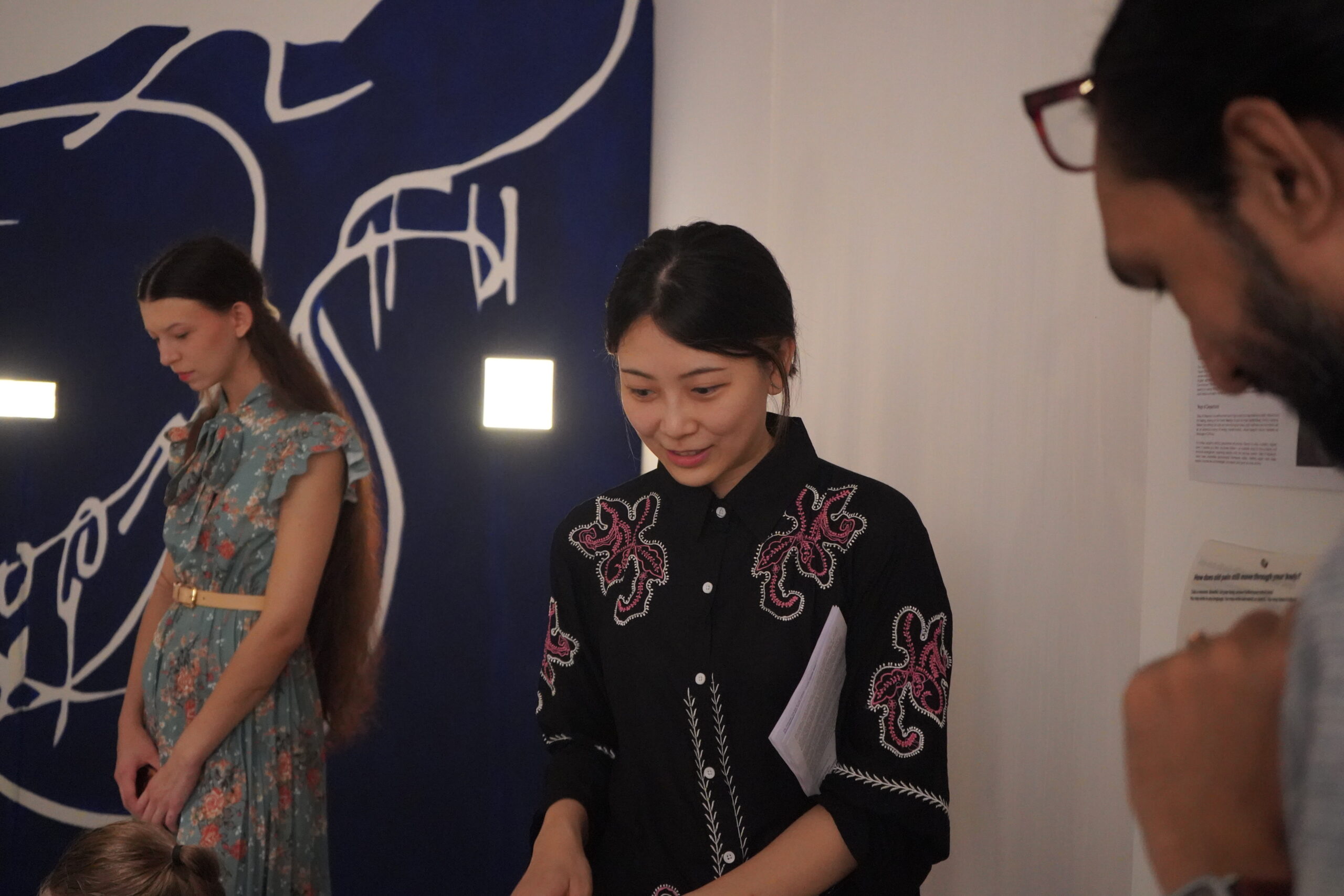
The wall painting is done with ‘cloud calligraphy’ and also is an abtract body. Inspired by Taoist Cloud Calligraphy, whose curving forms emerge from the shifting energy of incense smoke and clouds, I translate this visual language into a new, secretive script based on the English alphabet. Drawing on the ‘thoughts as clouds’ exercise from Acceptance and Commitment Therapy (ACT), a cognitive defusion practice that helps one step back from painful or racing thoughts by visualising them as clouds passing across an open sky, this work treats rumination not as an enemy to be erased, but as weather to be observed.
1.28s
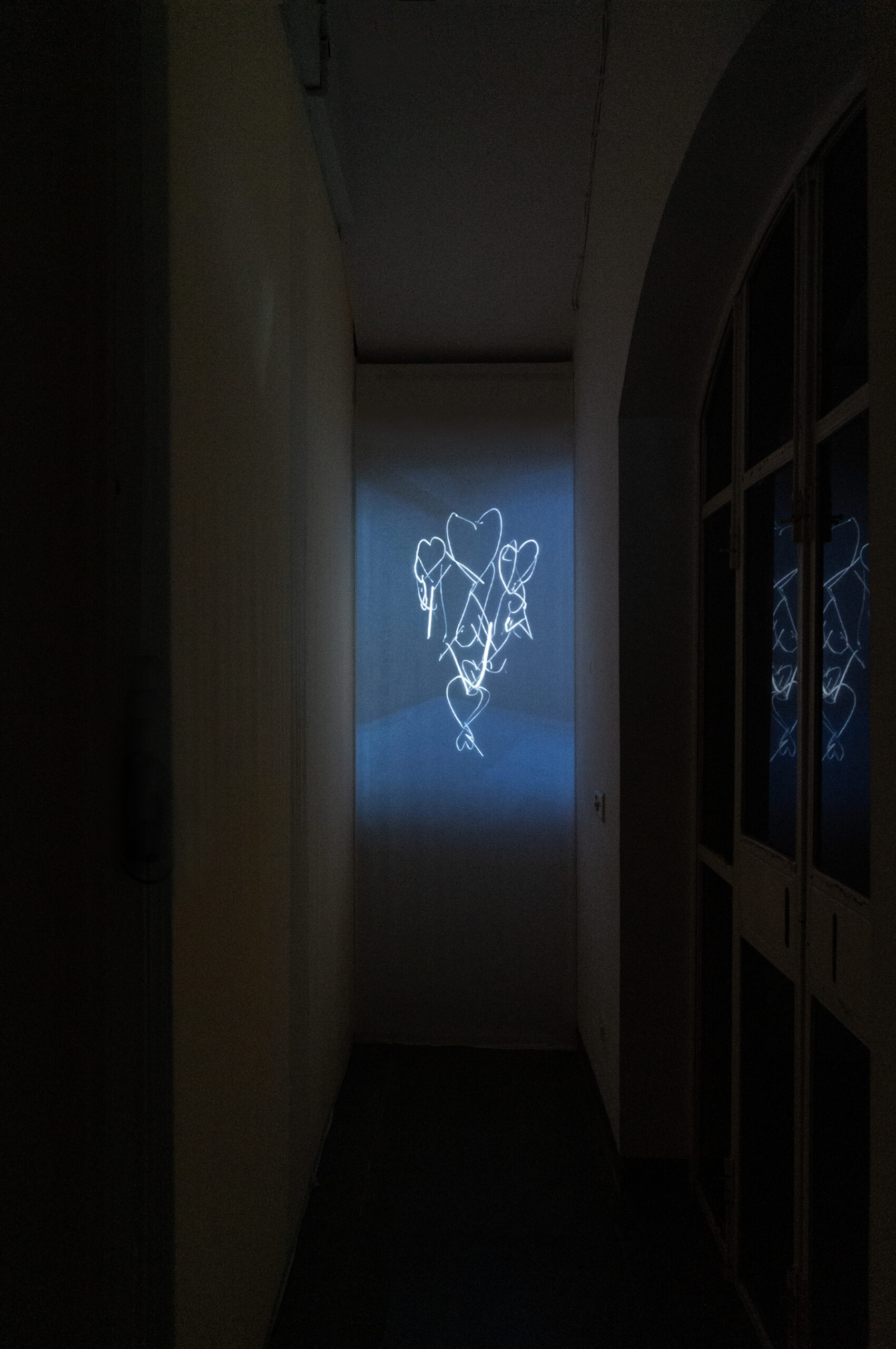
The video at the corridor is called ‘1.28s’. In a workshop led by Rafooghar at Vadehra Art Gallery, I was guided to close my eyes and draw with both hands simultaneously, each holding a pencil. The drawing that emerged: hearts and crosses that also resembled fences, it felt immediate, childlike, and honest. I later fed this drawing into an AI programme, prompting it to transform the structures into broken bamboo sticks: the same material used in kite-making. The title, ‘1.28s’, refers to the time it takes for the moon’s reflected light to reach the Earth, the ‘look-back time’. By the time we see the moon, the moment has already passed.
Images 5,6, and 7 are courtesy of Weng Io Wong.


