< Back to Counterstructures Residency
Lecture-performance
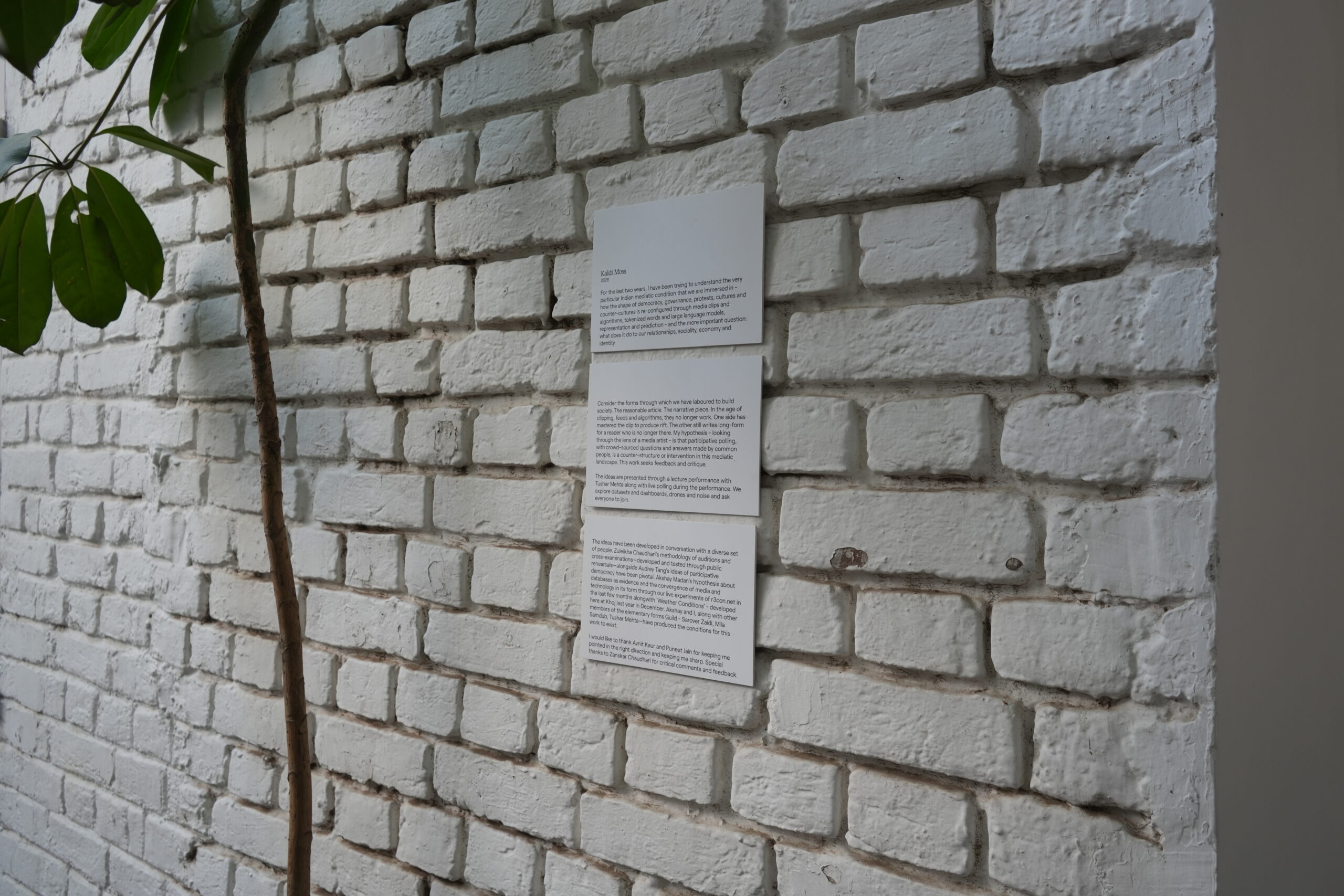
For the last two years, I have been trying to understand the very particular Indian mediatic condition that we are immersed in – how the shape of democracy, governance, protests, cultures and counter-cultures is re-configured through media clips and algorithms, tokenized words and large language models, representation and prediction – and the more important question: what does it do to our relationships, sociality, economy and identity.
Consider the forms through which we have laboured to build society. The reasonable article. The narrative piece. In the age of clipping, feeds and algorithms, they no longer work. One side has mastered the clip to produce rift. The other still writes long-form for a reader who is no longer there. My hypothesis – looking through the lens of a media artist – is that participative polling, with crowd-sourced questions and answers made by common people, is a counter-structure or intervention in this mediatic landscape. This work seeks feedback and critique.
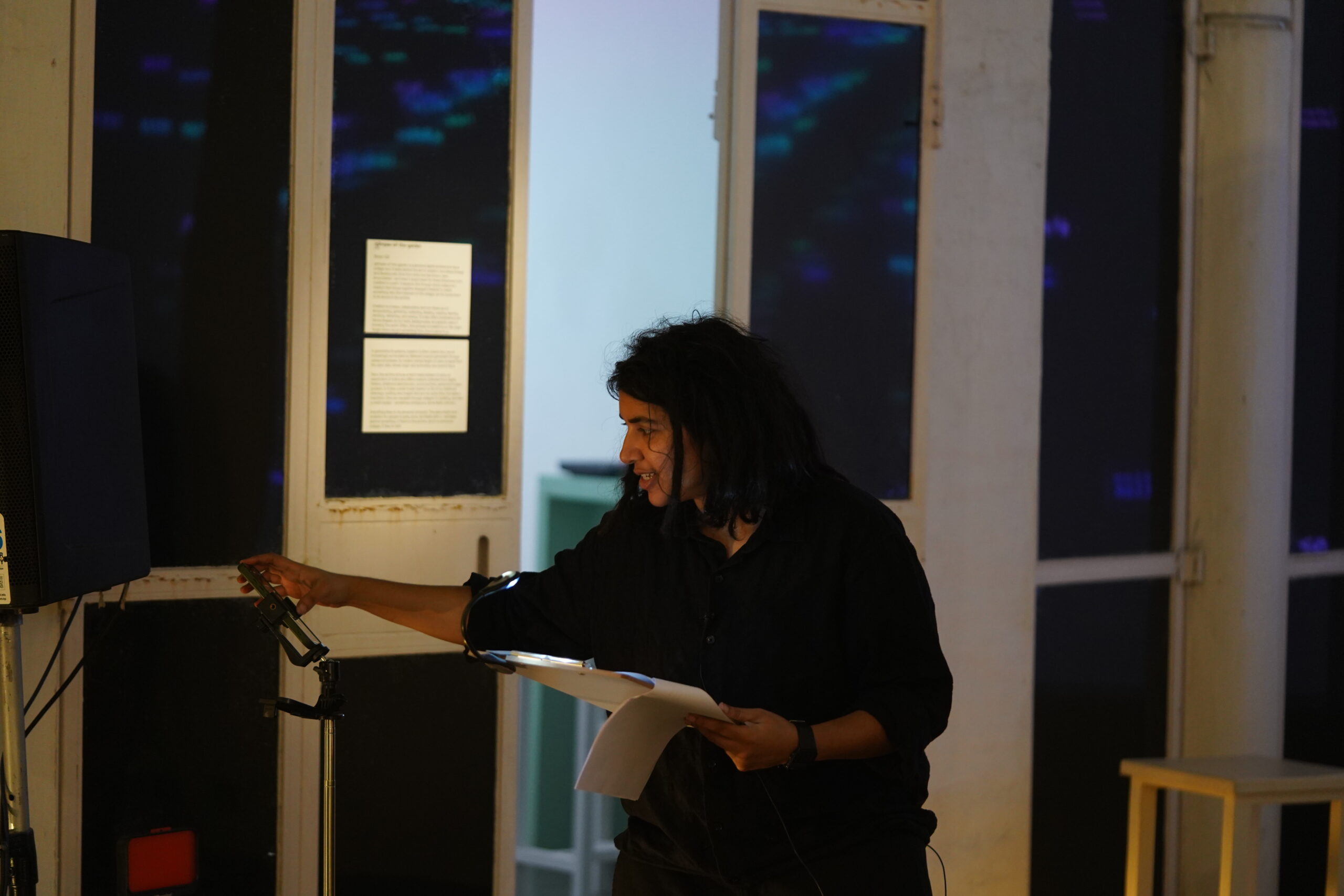
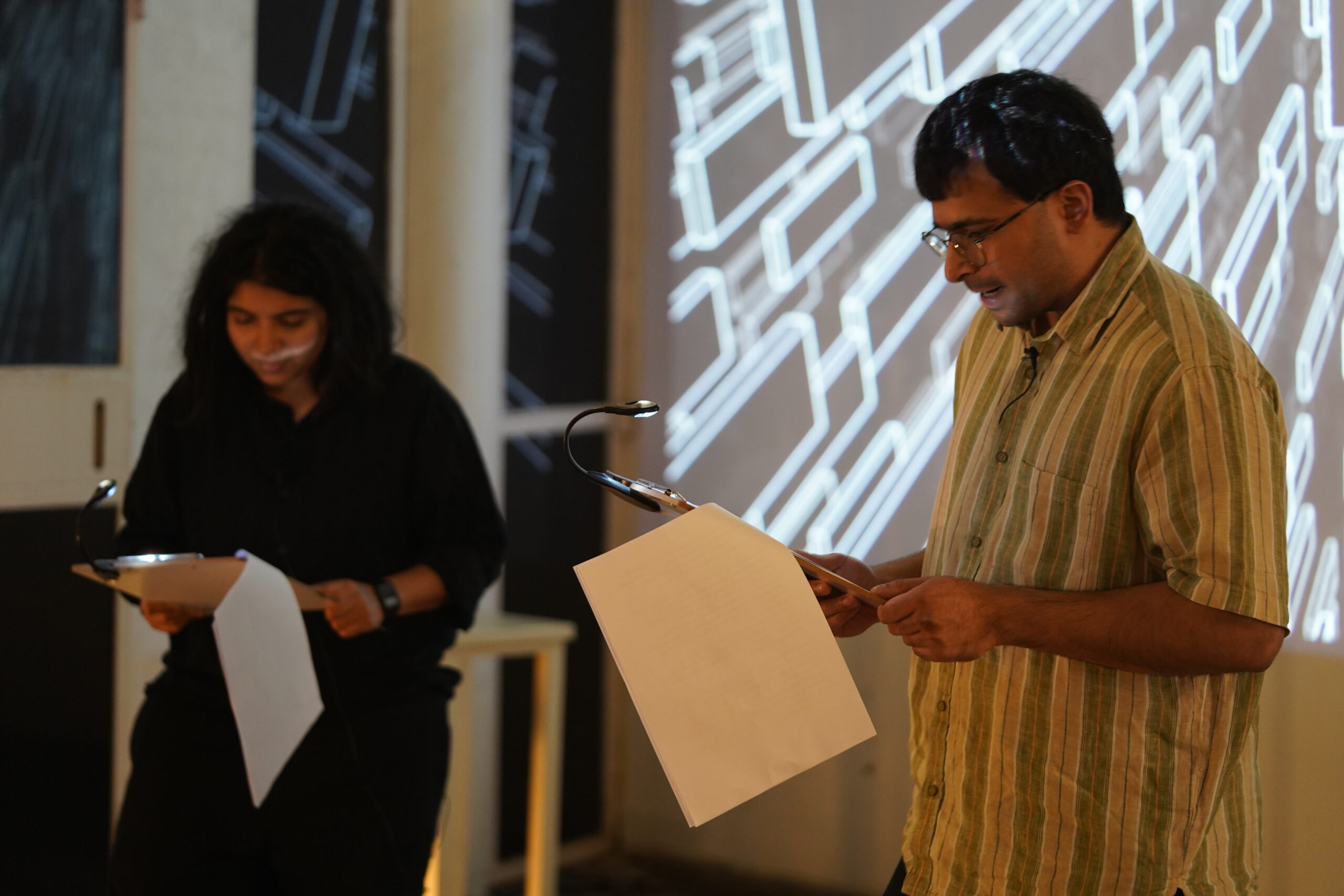
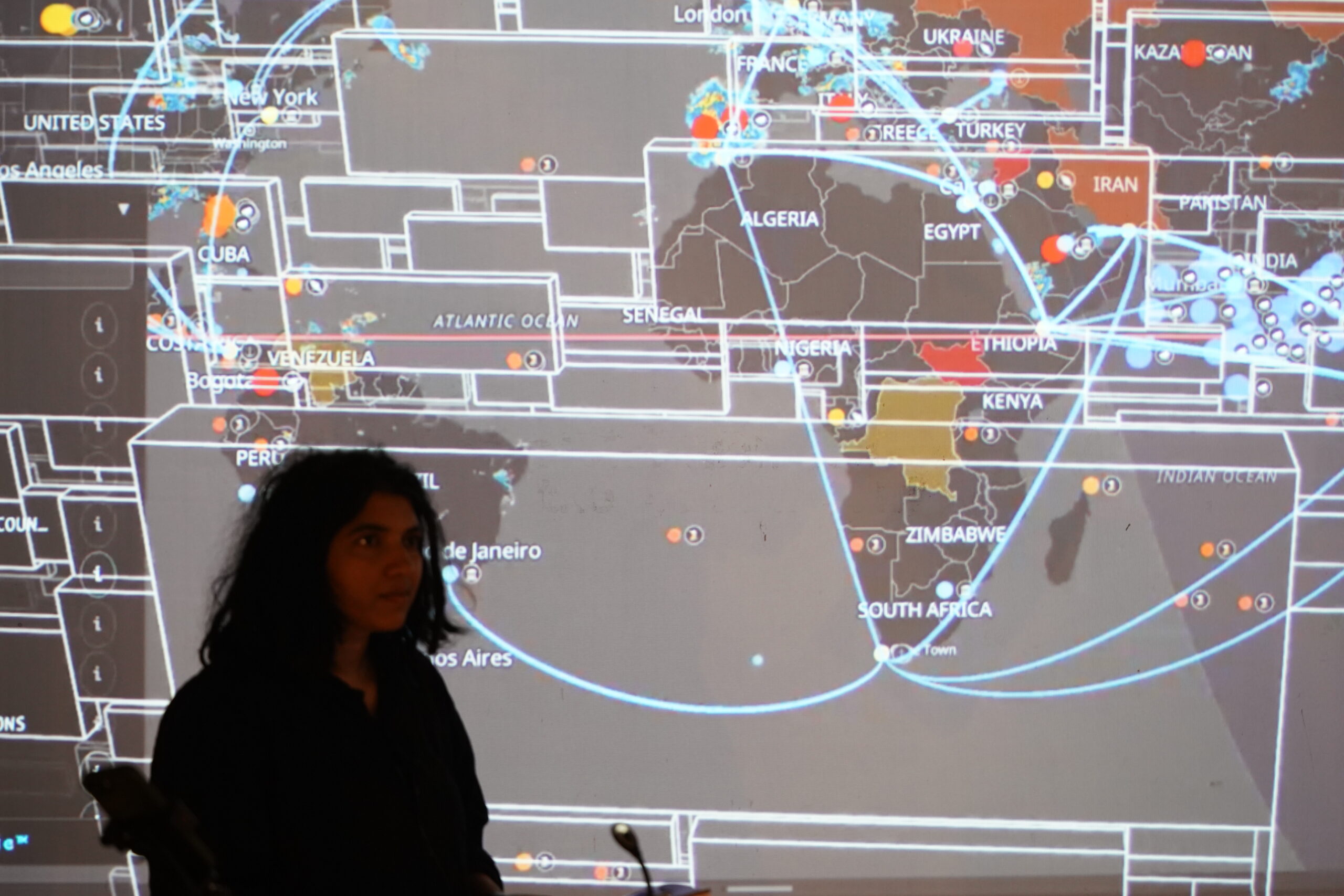
The ideas are presented through a lecture performance with Tushar Mehta along with live polling during the performance. We explore datasets and dashboards, drones and noise and ask everyone to join.
The ideas have been developed in conversation with a diverse set of people. Zuleikha Chaudhari’s methodology of auditions and cross-examinations—developed and tested through public rehearsals—alongside Audrey Tang’s ideas of participative democracy have been pivotal. Akshay Madan’s hypothesis about databases as evidence and the convergence of media and technology in its form through our live experiments of r3con.net in the last few months alongwith ‘Weather Conditions’ – developed here at Khoj last year in December. Akshay and I, along with other members of the elementary forms Guild – Sarover Zaidi, Mila Samdub, Tushar Mehta—have produced the conditions for this work to exist.
I would like to thank Avnit Kaur and Puneet Jain for keeping me pointed in the right direction and keeping me sharp. Special thanks to Zanskar Chaudhari for critical comments and feedback.
