< Back to Peers 2026
( ______ )



The first three words you notice are your way into this work.

This prompt accompanied the installation as an invitation and concept note to enter as an ongoing inquiry into care, support, and the ways we extend ourselves beyond the limits of the body.
My practice has long been informed by hospital infrastructures, where objects such as wheelchairs, walkers, and medical devices first prompted me to think about the body in relation to its extensions. Rather than approaching these objects as clinical instruments, I have come to understand them as mediators of support, revealing how the body continually negotiates its limitations through relationships with materials, systems, and other people.During this residency, I began asking whether extension is always material. Can care itself become an extension of the body? Can conversation sustain us in ways that resemble prosthesis or medicine? These questions gradually redirected the work from objects toward relationships, from the visibility of medical apparatus to the often invisible structures through which care operates.
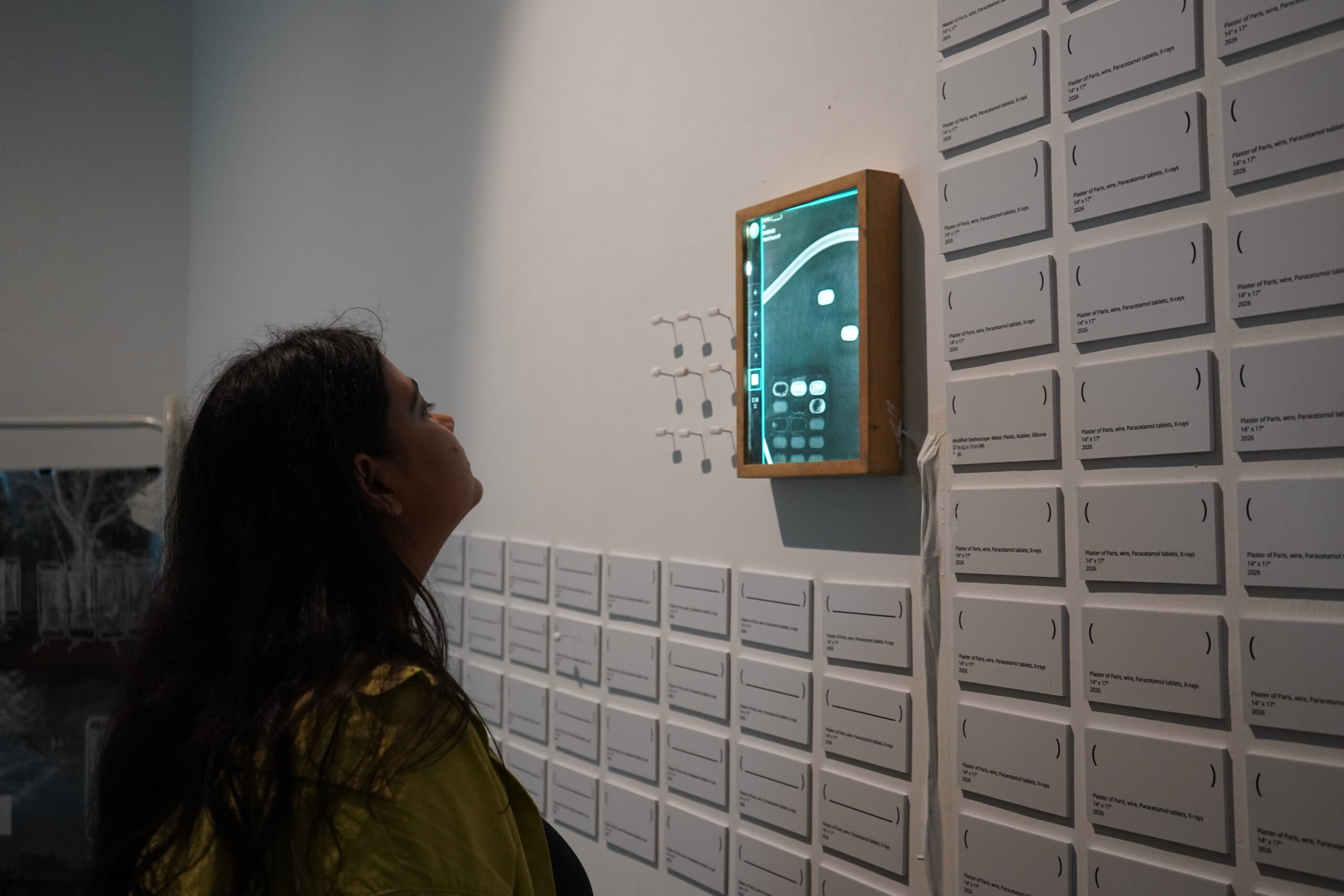
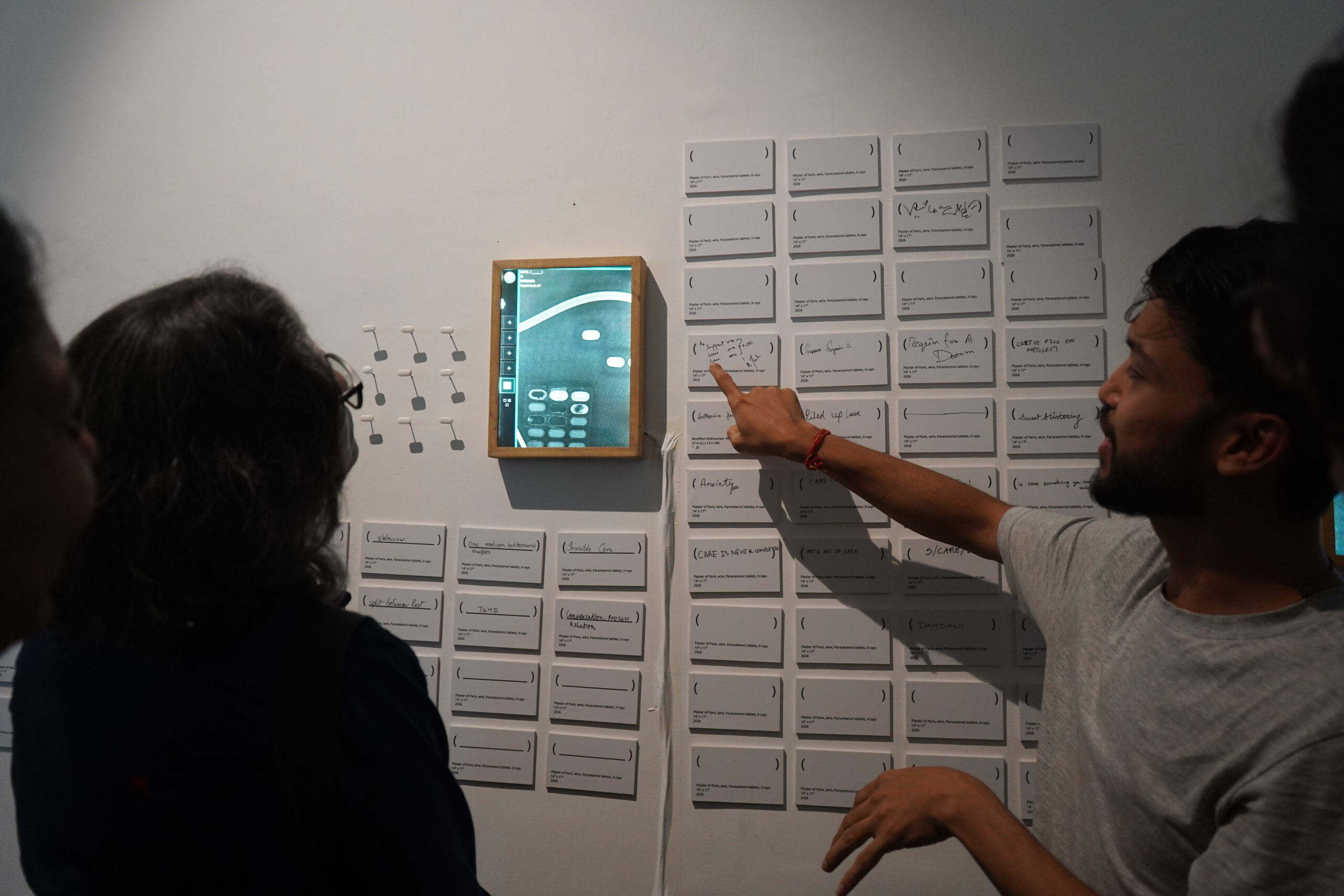
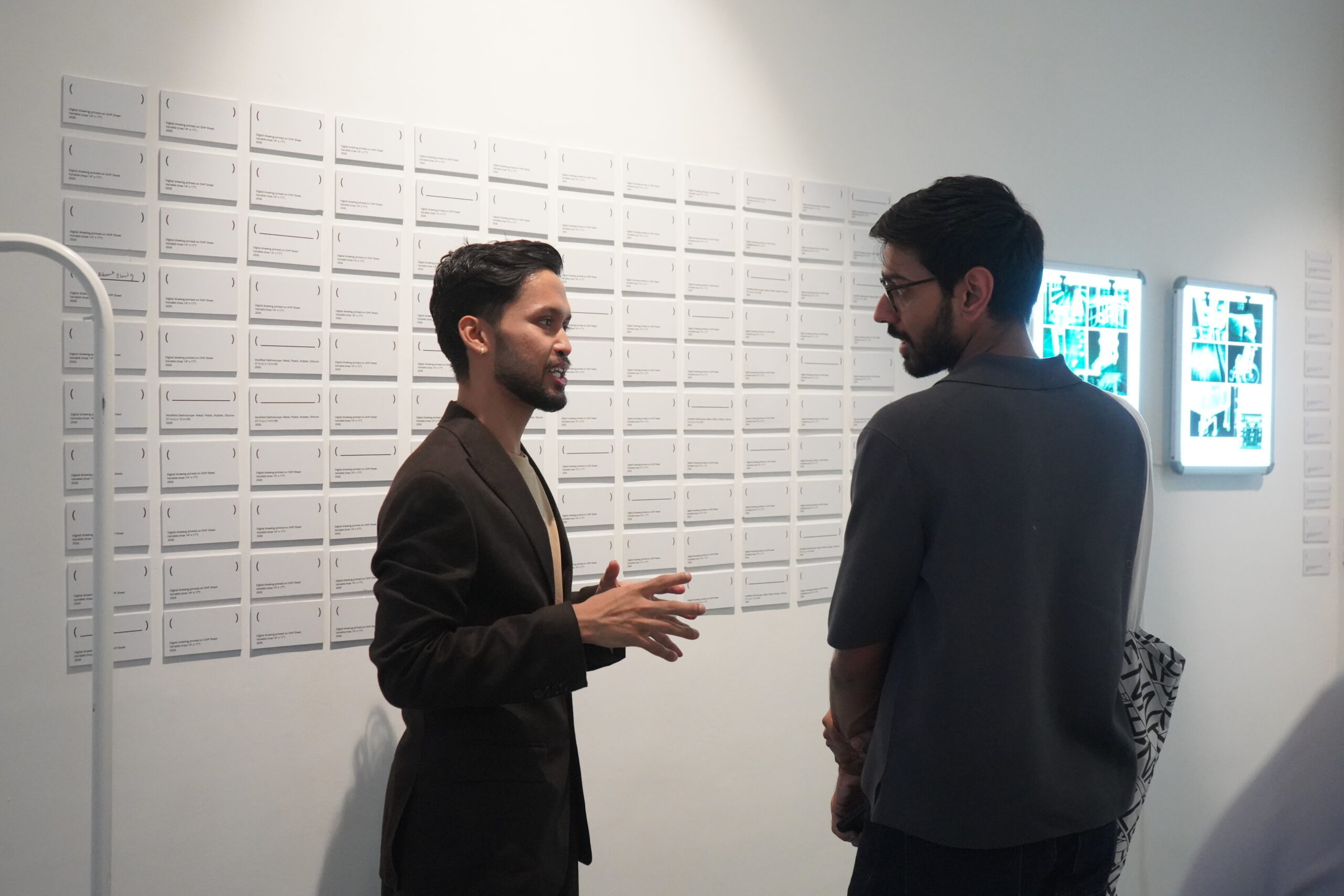
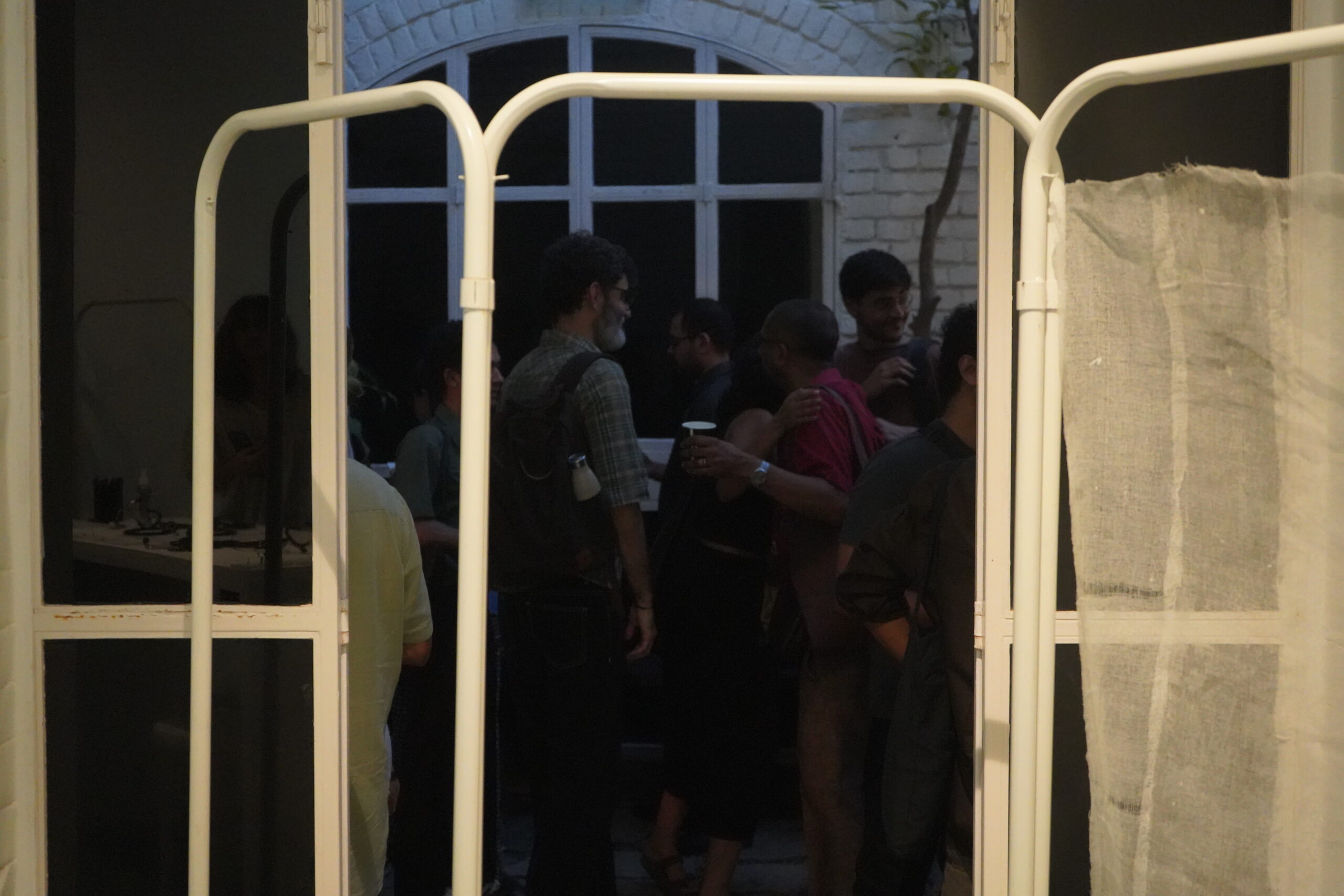
The installation invited visitors to enter a space constructed from hospital bedside partitions arranged as brackets ( ___ ). I became interested in the bracket as a gesture. A bracket holds something without interrupting it. It clarifies, accompanies, and creates room for another voice. It modifies the meaning of a sentence without replacing it, as care often transforms experience without becoming its subject. Entering the installation meant entering this bracket, and Inside this space, the usual relationship between artwork and artwork label was reversed. Instead of the label supporting the artwork, hundreds of labels for single work were left untitled and visitors were invited to title the works themselves. I began to think of titling as an act of completion. Every title carried traces of a conversation between the work and the person standing in front of it. Together, these titles became a growing archive of how people perceived care, support, vulnerability, and relation.
Altered stethoscopes, photographic X-ray works, and tablet sculptures extended these questions through different material languages. Modified stethoscopes reimagined listening as a relational act, asking what it means to listen simultaneously to oneself and to another. Photographic works, informed by the visual logic of X-rays, considered resistance as something that becomes visible only through what it prevents, reflecting on the uneven accessibility and limitations embedded within care infrastructures. In contrast, the tablet works turned toward the intimacy of domestic care. Words, hidden inside hand-formed tablets and revealed only through X-ray images, proposing that conversation, memory, and presence can also function as forms of prescription.
Rather than defining healing, this project asks what conditions make healing imaginable. It considers care not as an outcome but as a process of relation-one that is continually negotiated through language, attention, support, and the presence of another.


